
Africa faces the world’s most severe energy access challenges. Millions of households remain without electricity, while many rely on traditional biomass fuels for cooking and heating. Women and girls are particularly affected by energy poverty. Time spent collecting firewood and water often reduces opportunities for education, employment, and civic participation. Exposure to indoor air pollution from traditional cooking methods also contributes significantly to adverse health outcomes. Consequently, improving energy access is intrinsically linked to advancing gender equality and women’s empowerment across the continent.
The African energy context presents both a challenge and an opportunity for women’s participation in the sector. The SDG7 Tracking Energy Progress Report (2024) estimates that approximately 666 million people globally lacked access to electricity in 2023, with 565 million of them residing in Sub-Saharan Africa. The region now accounts for approximately 85% of the world’s unelectrified population.
This reality has profound gender implications. Women and girls are disproportionately affected because they bear primary responsibility for household energy management. Lack of electricity reduces opportunities for education, productive employment, healthcare access, and entrepreneurship. The persistence of energy poverty also contributes to significant time poverty. In many rural communities, women spend several hours each day collecting firewood and other biomass fuels. The International Energy Agency has identified clean cooking access in Sub-Saharan Africa as one of the most urgent development challenges due to its disproportionate impact on women and girls.
A notable trend across Africa is the emergence of women entrepreneurs within the renewable energy sector. Women are increasingly establishing businesses focused on solar home systems, clean cooking solutions, mini-grids, and productive-use energy technologies. These enterprises contribute not only to energy access but also to job creation, local economic development, and poverty reduction. Women entrepreneurs often possess strong community networks that facilitate technology adoption and customer engagement.
African countries have witnessed gradual increases in women’s representation within energy ministries, regulatory agencies, and public utilities. Women professionals are contributing to policy formulation, climate negotiations, infrastructure planning, and investment decisions. Despite these gains, representation remains uneven across countries and institutions. Women continue to face barriers related to organizational culture, limited mentorship opportunities, and unequal access to leadership pathways.
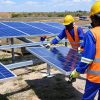
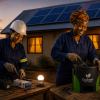
Research indicates that, in Africa, women’s participation has contributed significantly to the adoption of solar home systems in rural communities. Electrification has subsequently enhanced women’s ability to engage in income-generating activities such as food processing, retail trade, and digital services.
Kenya’s experience demonstrates how renewable energy markets can simultaneously expand energy access and create economic opportunities for women. Kenya has emerged as a global leader in off-grid solar energy deployment. The country’s success has been driven by innovative mobile payment systems and decentralized renewable energy solutions. Women have played a central role as solar entrepreneurs, sales agents, technicians, and community mobilizers. Companies operating in Kenya’s off-grid solar market have increasingly recruited women as last-mile distributors because of their strong social networks and trusted community relationships.
Rwanda has made notable progress in integrating gender considerations into national development planning and energy sector reforms. The country’s rural electrification strategy explicitly recognizes the importance of women’s participation in energy access initiatives. Through support for clean cooking technologies and decentralized renewable energy systems, women have increasingly become beneficiaries and entrepreneurs within the energy value chain. Government-supported programs have enhanced women’s participation in technical training and energy-related enterprises, contributing to broader national objectives related to gender equality and economic transformation.
Nigeria possesses one of Africa’s largest off-grid energy markets due to persistent electricity supply deficits. Women-led enterprises have become increasingly active in solar distribution, renewable energy financing, and clean cooking initiatives. Rising fuel prices and electricity shortages have accelerated demand for decentralized solar solutions, creating new business opportunities for women entrepreneurs. However, access to finance remains a major challenge. Studies consistently show that women-owned energy businesses face more challenges in obtaining credit and investment capital compared to male-owned enterprises.
South Africa’s Renewable Energy Independent Power Producer Procurement Programme (REIPPPP) has facilitated significant investment in utility-scale renewable energy projects. Women have increasingly entered professional roles within engineering, environmental management, project development, and energy finance. However, participation in senior technical and executive positions remains limited, illustrating the persistence of structural barriers even within more developed energy markets.
The evidence demonstrates that women’s participation in energy is increasing but remains far below its potential. Renewable energy technologies are creating new opportunities because they rely less on traditional industrial structures and more on decentralized, knowledge-intensive, and service-oriented business models. The African energy transition presents a unique opportunity to address two development challenges simultaneously: energy poverty and gender inequality. Investments in solar energy, mini-grids, clean cooking technologies, and green hydrogen industries can generate substantial employment opportunities for women while expanding energy access.
Africa’s abundant renewable energy resources provide a unique opportunity to advance both energy access and gender equality objectives. Solar, wind, hydro, geothermal, and bioenergy investments are creating new markets and employment opportunities. The expansion of decentralized energy systems is particularly significant because it allows women to participate as entrepreneurs, technicians, distributors, and community leaders without the high entry barriers associated with traditional energy infrastructure.